Creating an efficient workspace begins with choosing the right table height. A proper setup not only enhances comfort but also boosts productivity. The "Table Height Selection Guide" aims to educate users on the importance of selecting the correct height for their tables.
Many people overlook how table height affects their work experience. A table that's too high can cause strain, while one that’s too low can hinder movement. This guide provides practical insights based on professional assessments and user experiences.
Additionally, the guide addresses common mistakes. Many assume there is a one-size-fits-all height. However, individual needs vary based on body type and activity. Evaluating these factors is crucial. The right height makes a significant difference, leading to a more effective workspace.
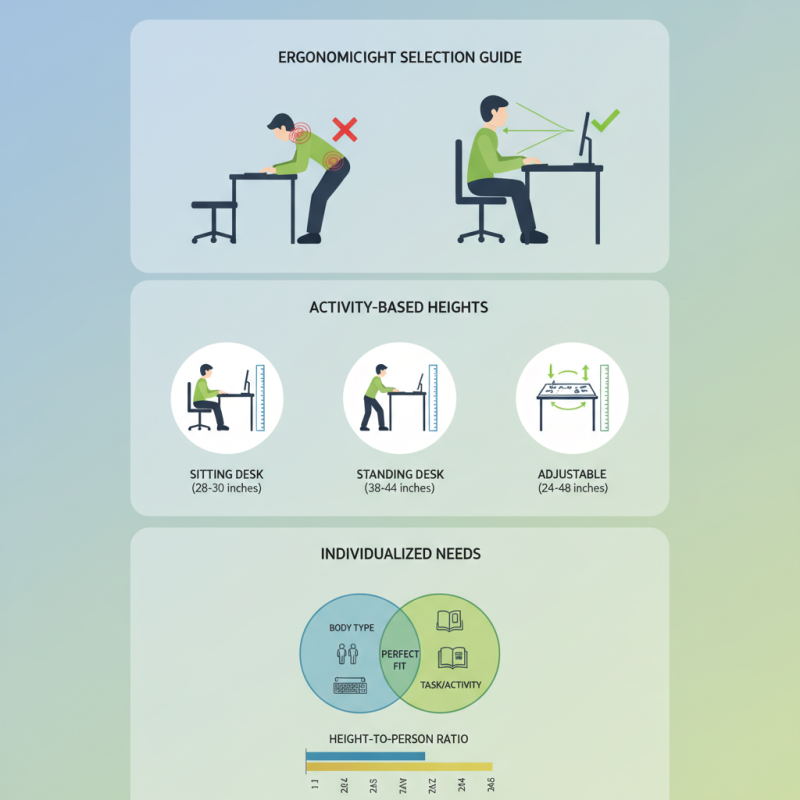
The importance of table height in workspace design cannot be overstated. A study from the American Journal of Preventive Medicine reveals that improper desk height can lead to a range of musculoskeletal issues. In fact, 60% of office workers experience neck or shoulder pain related to poor ergonomics. Finding the right height for your workspace can play a crucial role in preventing these chronic issues.
The ideal desk height depends on individual user needs. Ergonomic guidelines suggest that a desk should be between 28 to 30 inches high for most adults. However, variations in body size and chair height can make a significant difference. Research shows that standing desks are also gaining popularity, as they can reduce back pain by up to 32%. Yet, using them for prolonged periods without breaks can lead to fatigue. Balancing seated and standing time is essential for overall comfort.
Workers often overlook adjustments for their specific needs. It's common to see desktops cluttered with items that raise the effective height, making it even harder to maintain proper posture. Inadequate height can lead to decreased productivity. Regularly evaluating the table height should ensure the workspace promotes health and efficiency. Adjusting height settings can foster a better working environment.
When selecting the right table height for your workspace, it is essential to consider several critical factors. The primary factor is your body type. People come in various shapes and sizes, so a height suited for one person may not fit another. Measure your height while seated to find the ideal table height. The general guideline is to aim for 24 to 30 inches from the floor for a standard desk.
Another important aspect is the type of work you do. If you spend long hours typing, opt for a height that allows your elbows to rest comfortably and your wrists to remain straight. Conversely, standing desks have become popular for those seeking better posture and energy levels. Some may find shifting between sitting and standing helps alleviate fatigue. However, not every adjustable desk suits each space, raising the need for careful evaluation.
Remember to consider your chair as well. The chair's height greatly influences how a table feels. An ergonomic chair paired with an appropriate table height enhances comfort. Always test different combinations before making a final decision. This process may involve some trial and error, which is perfectly normal. Your workspace should cater to your personal needs and habits.
Selecting the right table height is crucial for creating an ergonomic workspace. Studies suggest that ideal table heights vary based on user activities and body types. For standard desk work, a height of 28 to 30 inches is often recommended. This range minimizes strain on the back and shoulders for most users.
For those engaged in drafting or detailed design work, a taller table between 36 to 42 inches can enhance comfort while allowing for movement. Many reports indicate that working at this height encourages better posture. Users often underestimate the importance of adjusting table heights. Improper heights can lead to discomfort over time.
Sitting all day can harm health. Standing desks are becoming popular, with recommended heights ranging from 38 to 42 inches. A recent industry survey revealed that 72% of users reported reduced fatigue when alternating between sitting and standing. Adjusting your table height thoughtfully can make a significant difference. Mindful choices lead to better productivity, yet many overlook this aspect. Finding the right fit is often more trial and error than planned.
This bar chart illustrates the recommended table heights for various activities and user types to ensure an ergonomic workspace setup. The heights are measured in centimeters.
Choosing the right table height is essential for your comfort and productivity. Proper measurements ensure that your chair and desk (or table) align well. Start by sitting comfortably in your chair. Your feet should rest flat on the floor. Then, measure the height from your seat to your elbows. This measurement gives you a solid baseline for your ideal table height.
Tips: Remember to account for any additional height from your chair cushion or if you plan to use a standing desk. Different tasks might require different heights, too. If you often type, consider a higher table. For drawing or writing, a lower surface might work better.
It's important to reflect on your habits. Do you shift in your chair? That could mean the table height isn’t quite right. Don't hesitate to adjust according to your daily activities. Each person's comfort level differs, so frequent re-evaluation is key. A table that's perfect today may not feel the same next month. Make sure your workspace remains a true reflection of your needs.
| User Height (inches) | Ideal Table Height (inches) | Recommended Chair Height (inches) | Comfort Level (1-10) |
|---|---|---|---|
| 60 | 28 | 18 | 8 |
| 65 | 30 | 20 | 9 |
| 70 | 32 | 22 | 7 |
| 75 | 34 | 24 | 6 |
| 80 | 36 | 26 | 5 |
Creating an efficient workspace can significantly enhance productivity and comfort. Adjustable tables have become a popular solution to accommodate diverse working styles. According to a report by the American Society of Interior Designers, well-designed workspaces can increase productivity by up to 20%. These tables allow users to shift between sitting and standing, fostering better posture and reducing fatigue.
When selecting an adjustable table, consider your height and preferred working position. The ideal desk height for most individuals is between 28 to 30 inches when seated. However, this can vary based on personal comfort and activities. The Global Workplace Study found that 67% of employees report less discomfort when using adjustable desks. Finding the right height can help create a more enjoyable working atmosphere.
Tips: Measure your elbow height while seated, as this will guide your table choice. Also, remember to adjust your chair height to match the table. If the table is too high, it may strain your wrists. Trial and error is essential; don’t hesitate to make adjustments over time. Experimenting with different heights can lead to the most comfortable setup for you.
: Measure your height while seated to find a suitable table height. Aim for 24 to 30 inches high.
Different body types require different heights. What works for one person may not fit another.
The chair height affects comfort. An ergonomic chair improves the overall experience with the right table height.
Consider an adjustable desk. It helps maintain energy and posture, but not every one fits every space.
Sit in your chair with feet flat. Measure from your seat to your elbows for a good baseline.
Reflect on your habits. If you shift frequently, the height may not be right. Adjust it accordingly.
Yes, typing may need a higher table, while drawing or writing might benefit from a lower surface.
Regular reassessment is important. Comfort can change over time, so adjust your workspace as needed.
Many don't consider their chair cushions. Even slight height differences can impact comfort significantly.
Always test different combinations of chair and table heights. It may take some trial and error to find the best fit.
The "Table Height Selection Guide" emphasizes the critical role of table height in designing an efficient and comfortable workspace. Understanding the significance of correct table height can enhance productivity and well-being for various activities and user types. Key factors such as individual ergonomics, type of work, and furniture dimensions play a vital role in making an informed choice.
The guide recommends specific table heights tailored for different activities, ensuring users can create a setup that maximizes comfort and efficiency. Furthermore, it outlines practical steps for measuring one's ideal table height, taking into account personal preferences and work requirements. Lastly, the flexibility of adjustable tables is highlighted as a versatile option for diverse workspace needs, making them an ideal solution for dynamic environments.

Hydra Furniture