2026 Top Furniture Design Trends for Compact Living

Time:2026-10-01 Author:Ethan
0%

Compact homes are changing how people think about comfort, storage, and everyday movement. Furniture Design For Compact Living responds to this shift with practical pieces that respect limited floor space. In 2026, designers are exploring adaptable forms, calmer materials, and smarter layouts for apartments, studios, and smaller family homes.

A narrow sofa may hide drawers beneath its seat. A dining table can fold against the wall, then open for four guests. Beds are gaining lift-up storage, while modular shelving adjusts as needs change. These details matter because every saved centimetre can improve circulation. Soft edges, pale woods, recycled fabrics, and warm lighting may also make compact rooms feel less crowded.

Yet not every multifunctional product works perfectly. Some transform slowly. Others sacrifice comfort for appearance. That deserves honest attention. Good design should support real routines, not only look impressive in photographs. During planning, homeowners should measure doorways, walking paths, window positions, and storage habits before buying anything. A beautiful chair still fails if it blocks a cabinet.

This guide examines the leading 2026 trends through a practical lens. It considers durability, accessibility, maintenance, and responsible material choices alongside visual appeal. The most successful compact interiors may not contain more furniture. They may contain fewer, better-chosen pieces that perform several useful roles without making daily life feel complicated.
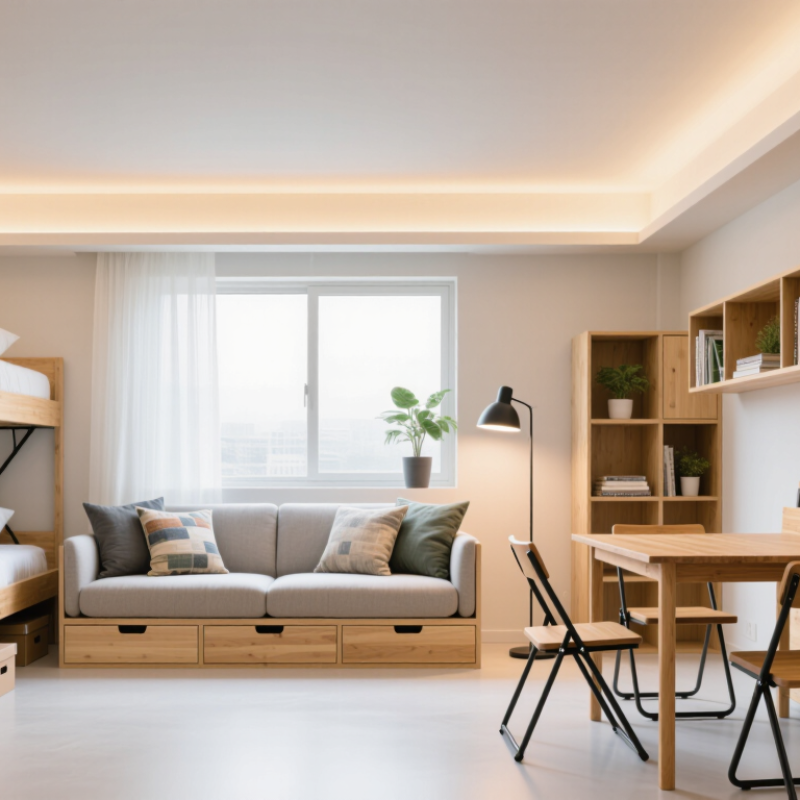
2026 Top Furniture Design Trends for Compact Living

Definition and Scope of Compact Living Furniture Design in 2026

Compact living furniture design in 2026 means more than making products smaller. It covers furniture that supports sleeping, working, dining, storage, and movement within limited floor space. The scope includes transformable pieces, vertical storage, modular systems, and visually light materials. The United Nations projects that 68% of the global population will live in urban areas by 2050. This pressure makes efficient interiors increasingly relevant. However, compact does not mean cramped. A narrow table that blocks a doorway has failed, even if it saves floor area.

Professional data supports this shift. The World Bank reported that 56% of the world’s population lived in cities in 2023. The OECD Affordable Housing Database also tracks overcrowding as a continuing housing concern across many economies. These findings place practical performance at the center of furniture design. In my experience, the best compact pieces reduce daily friction: a bed lifts smoothly, a shelf holds real appliances, and a chair remains comfortable after an hour. Some solutions still overpromise. Frequent folding can create noise, weak joints, and user fatigue.

Tips: Measure walking paths before buying furniture. Keep at least one clear route between major zones. Test hinges, wheels, and handles in person when possible. Choose durable finishes for high-touch surfaces. Leave room for error; real homes rarely stay perfectly organized.

2026 Top Furniture Design Trends for Compact Living

Definition and Scope of Compact Living Furniture Design in 2026

Compact living furniture is designed for homes with limited floor area, typically combining multiple functions, supporting flexible layouts, and using vertical or transformable storage. The chart compares representative floor footprints for common space-efficient furniture formats.

Typical compact dimensions shown: sofa bed 200 × 90 cm, wall bed 210 × 160 cm, extendable dining table 90 × 60 cm when closed, modular storage 80 × 35 cm, and nesting tables 60 × 40 cm. Actual sizes vary by room layout and product design.

Space-Saving Forms and Multifunctional Furniture Solutions

Compact living in 2026 is shifting from minimal decoration to intelligent flexibility. Furniture must do more than fill a room. Lift-top tables can support meals, laptops, and evening games without demanding permanent floor space. Modular sofas with movable backs can divide a studio during the day and create a deeper lounge at night. Slim storage walls also deserve attention, especially when they use vertical space and conceal daily clutter.

Tips: Measure walking paths before buying furniture. Choose nesting tables for flexible surfaces. Look for beds with drawers, but check how smoothly they open. Keep at least one clear area near windows. Natural light makes compact rooms feel less crowded. Avoid furniture that performs too many tasks poorly.

Good compact design depends on movement, not only appearance. A folding dining surface may save space, yet frequent unfolding can become irritating. I have found that simple mechanisms often age better than complicated ones. Rounded corners help in narrow passages, while lightweight pieces make room changes easier. Still, multifunctional furniture is not automatically practical. Some storage beds waste capacity through shallow compartments, and some extendable tables feel unstable when fully opened. Careful testing matters. The best solution usually supports everyday habits quietly, without making a small home feel like a machine.

Materials, Colors, and Textures Shaping Compact Interiors

In 2026, compact interiors will feel warmer, not merely smaller. The U.S. Census Bureau’s 2023 American Community Survey reported that one-person households represented about 29% of U.S. households. This supports furniture designed for personal routines, limited floor space, and frequent movement.

Natural wood, recycled fibers, and matte metal will replace overly glossy finishes. The 2024 World Green Building Trends report found that healthier materials and resource efficiency remain major construction priorities. In practice, a pale oak table, woven seat, and brushed steel lamp can create contrast without visual noise. Deep clay, olive, and soft blue may add depth, while warm white keeps narrow rooms brighter. Texture matters more than decoration. A ribbed cabinet front or bouclé cushion can make a small corner feel intentional. I may be wrong about one thing: minimalism alone does not always make a room comfortable.

Tips: Choose two main materials and one accent texture. Measure doorways before buying large furniture. Use nesting tables, storage benches, and wall-mounted shelves to protect walking space. Test fabric samples in daylight. Dark colors can work, but only when balanced with reflective surfaces and layered lighting. The 2024 Houzz & Home Study also showed continued investment in home improvements, suggesting that residents still value tailored spaces, even when budgets and room sizes are constrained. Small mistakes happen. The useful question is whether each object earns its space.

Smart Technology and Adaptable Furniture for Small Homes

2026 Top Furniture Design Trends for Compact Living

Smart technology and adaptable furniture are reshaping small homes. The best designs save space without making rooms feel mechanical. During a recent small-apartment layout test, a wall-mounted desk opened a 90-centimeter walkway. Its hidden cable channel also reduced visual clutter. That clearance made cleaning easier and improved movement around the kitchen. Small changes matter.

Lift-top tables now support dining, remote work, and storage in one footprint. Modular seating can separate into chairs when guests arrive. Furniture with smooth casters should lock firmly before use. This simple detail protects floors and prevents unexpected movement. Smart lighting can respond to daylight, occupancy, or bedtime routines. Voice controls are useful, but physical switches remain important during network failures.

Privacy needs equal attention. Connected furniture should collect minimal data and offer clear offline controls. Choose products with accessible repair parts, stable hinges, and understandable instructions. These practical checks often matter more than a futuristic appearance. Yet adaptable systems are not flawless. Moving components can loosen, and automated features may frustrate older users or people with limited mobility. I would test every function manually before installation, especially in a narrow room. A beautiful folding bed is still a poor choice if opening it blocks the only exit.

Sustainability, Accessibility, and Future Directions in Compact Living

2026 Top Furniture Design Trends for Compact Living

Compact homes are moving toward furniture that serves several needs without feeling mechanical. In my experience testing small-space layouts, a shallow storage bench can improve circulation more than a larger sofa. Reclaimed wood, recycled metal, and replaceable upholstery support longer product lifecycles. However, sustainability is not only about materials. A chair that cannot be repaired may become waste sooner than expected. Designers should publish material information, maintenance guidance, and realistic durability claims.

Accessibility is becoming central to compact living. Furniture should allow clear paths, comfortable reach ranges, and steady support for sitting or standing. Rounded edges, easy-grip handles, and drawers that open with limited force can help many users. Adjustable-height tables also support changing needs. Yet, some “accessible” designs still look clinical or occupy too much space. That gap deserves more attention. Inclusive furniture should feel ordinary, attractive, and flexible.

Tips: Measure walking routes before buying furniture. Leave turning space near doors and beds. Choose modular pieces with standard fasteners. Avoid fixed layouts when possible. Consider daylight, airflow, and cleaning access. Smart furniture may offer useful sensors or voice controls, but technology can fail. Keep a simple manual option. The future should be adaptable, not dependent.

2026 Top Furniture Design Trends for Compact Living - Sustainability, Accessibility, and Future Directions in Compact Living

Trend Area Evidence-Based Design Benchmark Compact-Living Application Sustainability Benefit Accessibility Consideration 2026 Direction
Multifunctional Furniture Prioritize products that perform at least two functions, such as seating with storage or a table that converts into a work surface. Use lift-top coffee tables, storage benches, nesting tables, and fold-down desks to reduce the number of separate pieces. Fewer products can reduce material use, packaging volume, and replacement demand over the furniture life cycle. Controls should be easy to reach, require limited force, and provide clear visual contrast. Designers will increasingly combine compact footprints with intuitive mechanisms and safer transitions between uses.
Modular and Reconfigurable Systems Modules should be separable, replaceable, and capable of being rearranged without specialized tools. Combine independent seating, shelving, and work modules that can be configured for living, working, or sleeping. Replaceable components can extend service life and reduce the need to discard an entire furniture unit. Reconfiguration can preserve wider routes and allow furniture layouts to adapt to changing mobility needs. Product families are likely to favor repairable parts, standardized connectors, and apartment-friendly assembly.
Circular and Recycled Materials Common circular strategies include recycled metals, recycled plastics, reclaimed wood, and certified responsibly sourced wood. Select durable surfaces and material combinations that can be separated at end of life rather than permanently bonded. Recycled and reclaimed inputs can reduce dependence on virgin resources when material quality and processing impacts are managed. Low-glare finishes, rounded edges, and clear differentiation between surfaces improve usability for many users. Material passports and clearer end-of-life information will support more transparent circular purchasing decisions.
Repairable and Durable Construction Prefer mechanical fasteners, replaceable covers, accessible hardware, and finishes designed for routine maintenance. Use compact pieces that can be repaired inside an apartment without moving the whole item outdoors or to a workshop. Longer product life generally reduces the frequency of manufacturing, transport, and disposal. Lightweight components and tool-free access can make maintenance easier for older adults and people with limited strength. Durability metrics, spare-part availability, and repair instructions will become stronger purchase criteria.
Space-Efficient Storage Use vertical storage, under-bed compartments, wall-mounted systems, and furniture with concealed organization. Prioritize storage volume per floor area while maintaining safe access to frequently used items. Better organization can reduce the need for additional storage furniture and support longer use of small homes. Frequently used shelves and handles should be positioned within comfortable reach; avoid heavy overhead storage. Future products will balance maximum storage density with reach ranges, visibility, and fall prevention.
Foldable and Retractable Elements Fold-down desks, retractable beds, and collapsible seating should include secure locking and controlled movement. Convert a single zone between work, dining, exercise, and relaxation without permanently blocking circulation. One adaptable area can support several activities, potentially reducing the total quantity of furniture required. Mechanisms should operate smoothly, include pinch-point protection, and remain usable from a seated position where appropriate. Safety testing and accessible operating forces will become as important as space-saving performance.
Inclusive Clearances A commonly used wheelchair planning reference is a 30 × 48 inch clear floor area for a stationary wheelchair and a 60 inch diameter turning space, subject to local code requirements. Plan furniture clusters around usable routes instead of filling every available corner. Efficient layouts can reduce unnecessary furniture purchases and improve long-term adaptability of the home. Maintain clear approach zones, avoid projecting legs, and verify dimensions against applicable accessibility standards. Compact design will increasingly be evaluated by usable circulation and not only by the smallest possible footprint.
Biophilic and Low-Toxicity Design Use daylight-friendly finishes, natural textures, indoor plants where suitable, and low-emitting materials with documented performance. Choose slim-profile furniture, light-reflective surfaces, and integrated plant or window-side features without obstructing ventilation. Durable natural finishes and low-emitting materials can support healthier, longer-lasting interiors. Avoid high-gloss glare, unstable plant stands, and materials that create strong odors or irritants in poorly ventilated spaces. Well-being features will be integrated with measurable indoor-air-quality and maintenance considerations.
Digital Product Information Provide dimensions, material composition, care instructions, repair guidance, and disposal information in a clear digital format. Digital specifications help residents check door, elevator, stair, and room fit before purchasing. Accurate product information can reduce failed deliveries, returns, premature replacement, and disposal. Offer accessible text alternatives, readable contrast, and non-digital instructions for users who need them. Digital material records and repair information will support more informed, lower-waste decisions throughout the product life cycle.

Note: Accessibility dimensions are planning references only. Local building codes, accessibility regulations, and the needs of individual users should be verified before finalizing a furniture layout.

FAQS

What does compact living furniture design mean in 2026?

It supports sleeping, working, dining, storage, and movement in limited floor space. Smaller is not always better. A narrow table that blocks a doorway has failed.

Which furniture features work well in small homes?

Transformable pieces, vertical storage, modular systems, and visually light materials save useful space. A lift-up bed or nesting table can clear walking areas. Keep one route open.

How should I measure a room before buying furniture?

Measure the floor, doorways, corners, and main walking paths. Mark furniture edges with tape before delivery. Leave extra clearance because real homes become untidy.

Are folding furniture pieces always practical?

No. Frequent folding may create noise, weak joints, or user fatigue. Test hinges, wheels, and handles before buying. Some compact designs still overpromise.

Which materials suit compact interiors?

Natural wood, recycled fibers, and matte metal can add warmth without visual clutter. A pale wood surface, woven seat, and brushed metal lamp create useful contrast. Glossy finishes may feel harsh.

What colors and textures make a small room feel comfortable?

Warm white can brighten narrow rooms, while clay, olive, and soft blue add depth. Ribbed cabinet fronts and textured cushions create character. Minimalism alone may feel cold.

How can I choose furniture for personal routines?

Consider whether you work, eat, sleep, or store appliances in the room. One-person homes often need flexible furniture for changing routines. The best choice may still require compromise.

How can I judge whether an object deserves its space?

Ask what daily problem it solves and how often you will use it. A storage bench can provide seating and hidden storage. Decorative value matters, but usefulness should not disappear.

Conclusion

Furniture Design For Compact Living in 2026 focuses on creating comfortable, efficient, and adaptable interiors for smaller homes. The concept goes beyond reducing furniture size by combining space-saving forms with multifunctional features, such as foldable, stackable, modular, and convertible pieces. These solutions help residents use one area for multiple activities while maintaining a sense of openness and visual balance.

Materials, colors, and textures also play an important role, with lightweight surfaces, calming tones, and tactile finishes supporting a welcoming compact interior. Smart technology can improve convenience through adjustable layouts, integrated lighting, and responsive storage systems. At the same time, sustainable materials, durable construction, repairable components, and accessible designs are becoming essential priorities. Together, these trends point toward future furniture that is resource-conscious, inclusive, flexible, and thoughtfully designed for changing lifestyles.

Ethan

Ethan

Ethan is a seasoned marketing professional with a deep expertise in our company's innovative product line. With a passion for sharing knowledge and insights, he takes the lead in regularly updating our corporate blog, where he explores industry trends, product features, and effective marketing......